
Planning
Alaska Cruise Packing List
Packing for an Alaska cruise is a layering problem, not a warmth problem. Daytime temperatures in July sit around 60 to 65°F in port, but the same day can involve wind on an open deck at a glacier face where it feels closer to 40°F, and rain that lasts all afternoon. The solution is three thin layers you can add and remove, not one thick coat.
The short answer
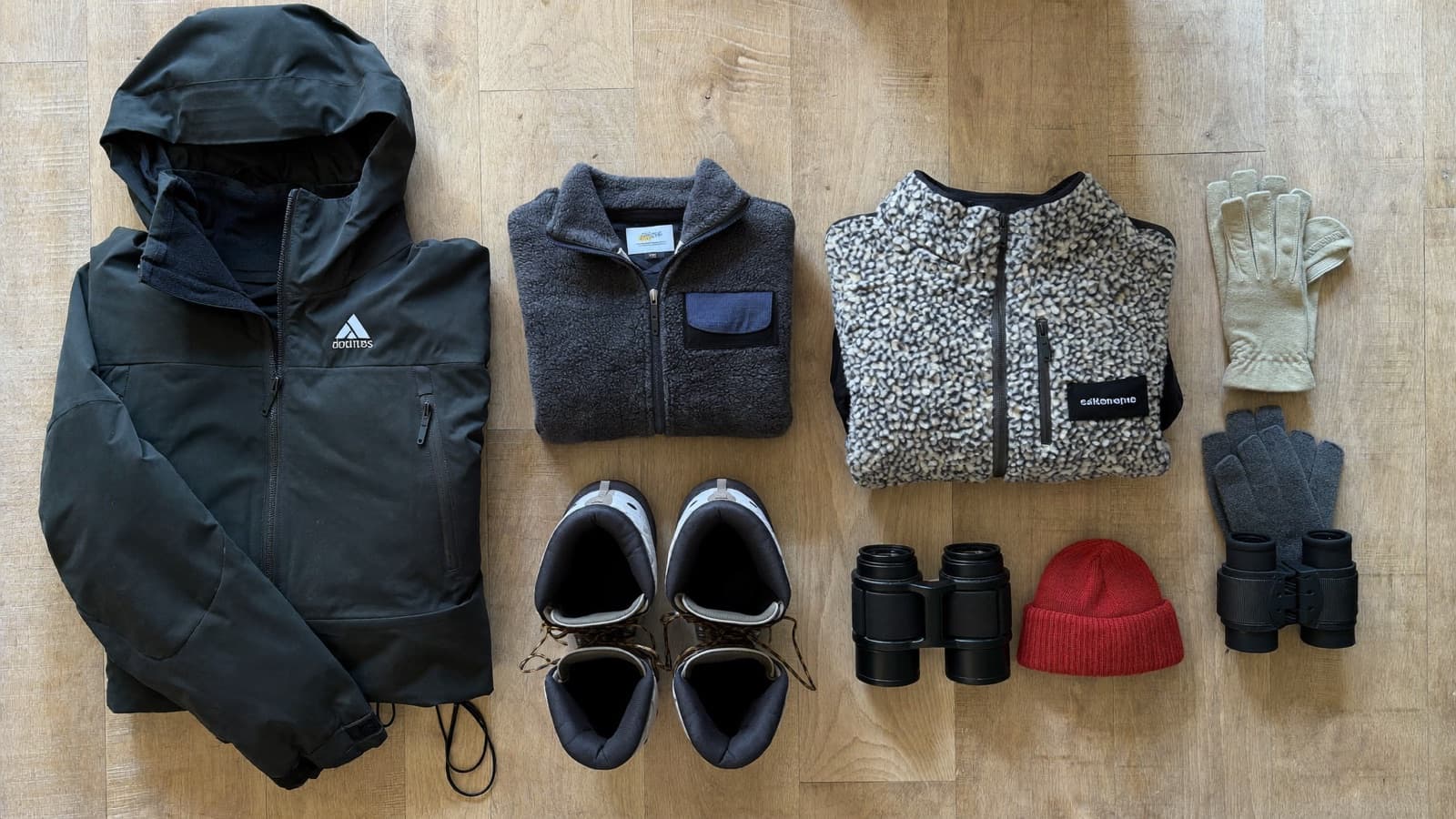
Pack three layers: a moisture wicking base, an insulating mid layer such as fleece or a light down jacket, and a genuinely waterproof and windproof shell with a hood. Add waterproof walking shoes, a warm hat and gloves, and binoculars. Skip the heavy winter coat, the umbrella and most formal wear.
Key points
- Layering beats bulk. Three thin layers handle everything from a 65°F port day to a 40°F glacier deck.
- A waterproof shell with a hood is the single most important item. Water resistant is not enough.
- Waterproof footwear matters more than most people expect. Wet feet ruin a port day.
- Binoculars are the most under packed item on an Alaska cruise.
- Leave the umbrella, the heavy parka and most formal wear at home.
The most common Alaska packing mistake is preparing for cold. Alaska in summer is not especially cold: Juneau in July averages a high around 64°F, which is a mild English summer day. The problem is variance. On a single day you may be warm walking in Skagway at noon, wet in Ketchikan at two, and cold enough on deck at a glacier face at four that your hands stop working.
A single heavy coat handles one of those three conditions. A layering system handles all of them and takes up less space in the case. Everything below is built on that principle.
The three layer system, explained properly
- Base layer
- Sits against the skin and moves moisture away from it. Merino wool or a synthetic. Never cotton, which holds sweat and rain and then chills you.
- Mid layer
- Traps warm air. Fleece, a light down jacket or a synthetic insulated jacket. This is the layer you add and remove most often.
- Shell
- Blocks wind and rain and lets moisture out. Must be genuinely waterproof with taped seams and a hood, not merely water resistant.
The value of the system is that two thin mid layers give you four useful configurations rather than two. Base plus shell is right for a mild wet port day. Base plus fleece plus shell handles most of the trip. Base plus fleece plus down plus shell handles the glacier deck at 6:00 am. One thick coat gives you only on or off.
The complete list
Outerwear and layers
- Waterproof, windproof shell jacket with hood
- Fleece or heavy sweater
- Light packable down or synthetic insulated jacket
- 3 to 4 long sleeved base layer tops, merino or synthetic
- 2 pairs of trousers, one quick drying, one comfortable
- Optional waterproof over trousers for boat trips and hikes
- Warm hat that covers the ears
- Light gloves, ideally touchscreen compatible
- Buff, scarf or neck gaiter
Footwear
- Waterproof walking shoes or light hiking boots, broken in
- Comfortable shoes for the ship
- One smarter pair if your line has a dress code
- 4 to 5 pairs of wool or synthetic socks
- Optional flip flops for the cabin and spa
Optics and electronics
- Binoculars, 8x42 or 10x42
- Camera plus a longer lens if you have one
- Spare camera batteries, cold drains them quickly
- Power bank for long port days
- Dry bag or waterproof phone pouch
- Universal adapter is not needed on United States flagged itineraries, but check your ship
Health and practical
- Motion sickness remedy of your choice, started before you need it
- Prescription medication in the original packaging, in hand luggage
- Sunscreen, genuinely needed on water and snow
- Lip balm with sun protection
- Insect repellent for July and August shore excursions
- Small daypack, ideally water resistant
- Reusable water bottle
Evening wear
- Smart casual for most evenings on most lines
- One jacket or dress for formal or gala nights if your line has them
- Check your specific line before packing anything heavy
What to leave at home
| Item | Why it stays home |
|---|---|
| Umbrella | Alaska rain comes with wind. A hood works, an umbrella inverts. Several ships also provide them. |
| Heavy winter parka | Too warm for port days, too bulky for the case. Two mid layers do the job better. |
| Multiple formal outfits | Most lines have one or two smarter nights at most, and many passengers skip them. |
| Hairdryer | Every cabin has one. It may be weak, but it exists. |
| Beach and swim gear beyond one set | Outdoor pools are largely unused. One swimsuit for the indoor pool or hot tub is enough. |
| Iron or steamer | Prohibited on most ships as a fire risk. Ships offer pressing services. |
| Excessive shoes | Two pairs plus one smart pair covers everything. Shoes are the heaviest thing in most cases. |
How the list changes by month
| Month | Adjustment |
|---|---|
| May | Add a warmer hat and a second mid layer. Snow is still low on the mountains and glacier days are noticeably colder. |
| June | Standard list. Add sunglasses and sunscreen for the long daylight, and a sleep mask. |
| July | Standard list. Add insect repellent, since mosquitoes are active on shore excursions inland. |
| August | Add a second waterproof layer or spare shell. August is the wettest month of the season in much of Southeast Alaska. |
| September | Add warmer gloves and a heavier mid layer. Evenings are colder and the first snow can appear on the passes. |
How much luggage, and how to arrange it
One medium suitcase per person plus a daypack is sufficient for a seven night Alaska cruise, and it is what we would pack. Cabins are small and storage is limited, particularly on Norwegian and on older ships.
- Checked bags can take several hours to reach the cabin after embarkation. Anything you need in the first four hours goes in hand luggage.
- Medication, travel documents and valuables always travel in hand luggage, never in a checked bag handed to a porter.
- Pack one full change of clothes in hand luggage in case a bag goes astray.
- Laundry is available on all ships and self service launderettes exist on Princess, Holland America, Carnival and some others. On a fourteen night cruisetour, a mid trip wash halves what you need to pack.
- Leave 20 percent of the case empty if you intend to buy anything. Alaska Native art, smoked salmon and outdoor gear are all common purchases.
Frequently asked questions
What is the single most important thing to pack for an Alaska cruise?
Do I need a heavy winter coat for an Alaska cruise?
How dressy do I need to be in the evening?
Should I bring binoculars on an Alaska cruise?
Do I need waterproof trousers?
Can I do laundry on an Alaska cruise?
Keep researching
Day by day guidance on outfits rather than a list.
Real temperatures by month, port and activity.
Month by month weather, wildlife and pricing.
Storage, layout and what actually matters in a cabin.