
First Timers
Common Alaska Cruise Mistakes
Most Alaska cruise problems are not bad luck. They are predictable errors made months before departure, and almost all of them are avoidable for free. These are the ones we see most often, ranked by how much they cost.
The short answer
The most expensive Alaska cruise mistake is flying in on embarkation day, which risks missing the ship entirely. The most common are budgeting only for the fare, packing a heavy coat instead of layers, sleeping through the dawn fjord transit, and booking a cruise line without checking whether it has Glacier Bay access.
Key points
- Flying in on embarkation day is the single costliest mistake available.
- The fare is roughly half the trip cost. Budget the rest.
- Ships rotate at glaciers, so paying for a specific side achieves nothing.
- The best hour of the cruise happens at 5:30 am and most people sleep through it.
- Check Glacier Bay access on the dated sailing, not the brochure.
Almost every Alaska cruise problem is a decision made months earlier. Here are the ones that cost the most, in order.
1. Flying in on embarkation day
Cost: potentially the entire trip.
A cancelled or delayed flight means missing the ship. Travel insurance may cover some of the loss but will not recreate the holiday, and catching up at the next port is difficult in Southeast Alaska where the ports have no road access.
Arrive at Seattle or Vancouver at least one day early. For Whittier or Seward sailings, where a further 60 to 125 mile land transfer follows the flight, arrive two days early.
2. Budgeting only for the fare
Cost: $2,000 to $5,000 of unplanned spending.
The cruise fare is 45 to 60 percent of what an Alaska trip actually costs. Excursions alone commonly run $1,200 to $2,400 for a couple, and Alaska has the most expensive shore excursions in mainstream cruising.
Build the whole number before you book, using the method in our cruise budget guide.
3. Not checking Glacier Bay access
Cost: an eight hour national park day.
Glacier Bay entry is limited by National Park Service permits held by specific operators. Royal Caribbean and Celebrity do not have entry at all. Even lines that do, like Princess, do not include it on every sailing.
Confirm it on the specific dated itinerary, not the brochure.
4. Sleeping through the fjord transit
Cost: the best hour of the cruise.
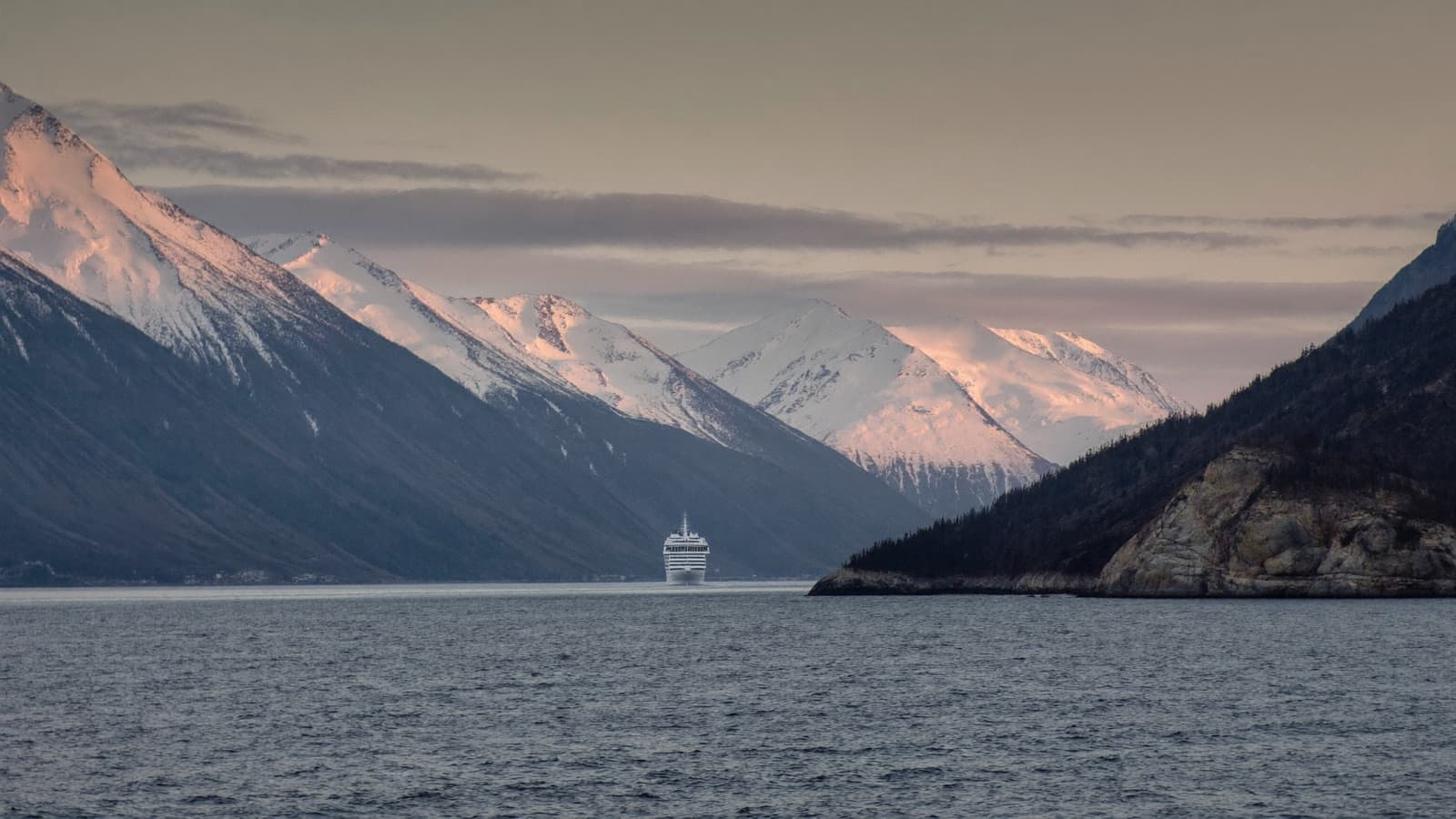
Ships often enter Endicott Arm or Tracy Arm between 5:00 and 7:00 am. The water is usually glassy, the light in a north facing fjord is the best of the trip, and there will be perhaps twenty people on deck.
Set an alarm. It is free.
5. Packing a heavy coat instead of layers
Cost: comfort, and case space.
One thick coat handles one condition. A base layer, fleece, light down jacket and waterproof shell handle four, pack smaller, and cover everything from a 68 degree afternoon in Skagway to a 40 degree glacier morning in wind. See the packing list.
The specific failure is a jacket that is water resistant rather than waterproof. Test it in a shower before you travel.
6. Paying extra for a specific side of the ship
Cost: $200 to $600 for nothing.
Ships rotate through 360 degrees at every major glacier precisely so that everyone gets the same view. The Inside Passage is narrow enough that both sides see land throughout. Put the money into a mid ship position or a deck with an overhang, both of which have real effects.
7. Booking too many excursions
Cost: a stressful week.
Alaska port days give you roughly two hours less than the printed time once you account for gangway queues, transfers and the buffer before all aboard. One substantial excursion per port is right. Two rarely works.
8. Booking independent excursions without a return guarantee
Cost: potentially a flight to catch the ship.
Independent operators are 25 to 40 percent cheaper and often better, but if they run late the ship sails and you are responsible. Only book independently where the operator explicitly guarantees return well before all aboard, and add your own buffer. See shore excursions.
9. Not bringing binoculars
Cost: most of the wildlife.
Alaska wildlife is usually at 100 to 500 metres: beyond useful phone camera range and beyond comfortable naked eye detail. An 8x42 pair is bright enough for overcast days and stable enough to hold on a moving deck. This is the most consistently under packed item on any Alaska cruise.
10. Assuming the drinks package is good value
Cost: $500 to $1,400.
Break even is five to nine drinks per person per day including the gratuity. Alaska port days are long and cold, the pool deck goes unused, and most passengers drink far less than they would in the Caribbean. Pay as you go for two days and check your account.
11. Treating rain as a disaster
Cost: a wasted port day.
Ketchikan averages around 140 inches a year. Boat trips run in rain, glaciers look better in overcast light, and only helicopter and floatplane tours cancel. Pack properly and go out anyway.
12. Missing the ranger and naturalist programming
Cost: understanding.
On Glacier Bay sailings, National Park Service rangers and a Huna Tlingit interpreter board for the day. On other itineraries an onboard naturalist provides commentary. It is free, it is the best content on the ship, and it is the difference between looking at ice and understanding what you are looking at.
13. Leaving cellular data on at sea
Cost: hundreds of dollars.
Once out of range of shore towers, phones connect to the ship's onboard cellular service at maritime roaming rates. Use airplane mode with WiFi enabled at sea, and switch cellular back on in port where your normal United States plan works at no extra cost.
14. Booking late
Cost: $300 to $900, plus cabin choice.
Alaska fares usually rise as the sailing approaches, not fall. The Caribbean strategy of waiting for a discount loses money here. See Alaska cruise deals.
15. Skipping travel insurance
Cost: potentially six figures.
Southeast Alaska ports have no road connection, so serious medical cases are flown out by air ambulance. Cruise line policies frequently cap evacuation at $25,000 to $50,000, which is not adequate. Buy an independent policy with at least $250,000 of evacuation cover, within 14 to 21 days of your deposit.
Frequently asked questions
What is the biggest mistake people make on an Alaska cruise?
Do I need to pay extra for a particular side of the ship in Alaska?
How much should I budget beyond the Alaska cruise fare?
What do people most regret on an Alaska cruise?
Related articles
First Timers
The Best Alaska Cruise for Families
Which Alaska cruise line suits families best, compared on youth programmes, wet weather facilities, cabins and cost, with picks by child age.
Updated
First Timers
Your First 24 Hours on an Alaska Cruise
What to do in the first 24 hours of an Alaska cruise, from boarding to the first morning, including the bookings that must happen immediately.
Updated
First Timers
Alaska Cruise Questions, Answered
Direct answers to the questions people most often ask before an Alaska cruise, covering timing, cost, packing, itineraries, seasickness and wildlife.
Updated