
Destinations
A Day in Glacier Bay, Hour by Hour
Glacier Bay is the only place on an Alaska cruise where the National Park Service comes aboard, and the only glacier day that lasts eight to ten hours. Knowing the shape of the day in advance is the difference between watching a wall of ice and understanding what you are looking at.
The short answer
A Glacier Bay day runs roughly 6:00 am to 4:00 pm. Rangers board near Bartlett Cove at dawn, the ship transits up the bay through progressively younger landscape, holds position at Margerie Glacier for about an hour around midday, often visits Johns Hopkins Inlet or Lamplugh Glacier, then transits back out. Nobody goes ashore.
Key points
- Rangers and a Huna Tlingit interpreter board at the park boundary around 6:00 am.
- The transit up the bay travels through roughly 250 years of ecological succession.
- The ship holds at Margerie Glacier for about an hour and rotates 360 degrees.
- Johns Hopkins Inlet is often closed before late June for seal pupping.
- Nobody goes ashore. This is a scenic cruising day from start to finish.
Glacier Bay National Park is the only glacier day on an Alaska cruise that lasts a full working day, and the only one where the National Park Service puts people on your ship to explain it. Knowing what happens and when lets you plan around it rather than react to it.
Before the day
Check the daily programme the night before for the entry time and the ranger talk schedule. Lay out your layers, including a hat and gloves, and put them by the door. Charge camera batteries and put a spare somewhere warm.
Set an alarm. Most of what follows happens before many passengers are awake.
Around 6:00 am: the rangers board
A small National Park Service vessel comes alongside near Bartlett Cove, at the mouth of the bay, and rangers transfer aboard along with a cultural interpreter from the Huna Tlingit, whose ancestral homeland this is.
They set up an information desk, usually in a forward lounge, and begin narrating over the public address system. From this point the commentary continues, on and off, for the whole day.
6:00 to 10:00 am: the transit up the bay
This is the part most passengers sleep through and it is arguably the most interesting.
When George Vancouver's expedition charted this coast in 1794, the bay you are sailing up was filled with ice several thousand feet thick. By 1879 the ice had retreated some forty miles. Today the head of the bay is over sixty miles from where the ice front stood.
The consequence is visible from the deck. Near the mouth you pass mature spruce and hemlock forest, growing on land that has been ice free for two centuries. Further up, that gives way to alder and willow. Further still, to bare moraine and rock exposed within living memory.
You are travelling forward through roughly 250 years of ecological succession in four hours, and the rangers will tell you exactly where you are in that sequence if you are outside listening.
Things to watch for on the way up:
- South Marble Island, a Steller sea lion haul out with large seabird colonies including tufted puffins and kittiwakes
- Gloomy Knob, a steep limestone outcrop where mountain goats are seen with unusual reliability
- Humpback whales, common in the lower and middle bay
- Sea otters, which have recolonised the bay in large numbers
- Brown bears on beaches, worth scanning for with binoculars
Around 11:00 am to 1:00 pm: Margerie Glacier
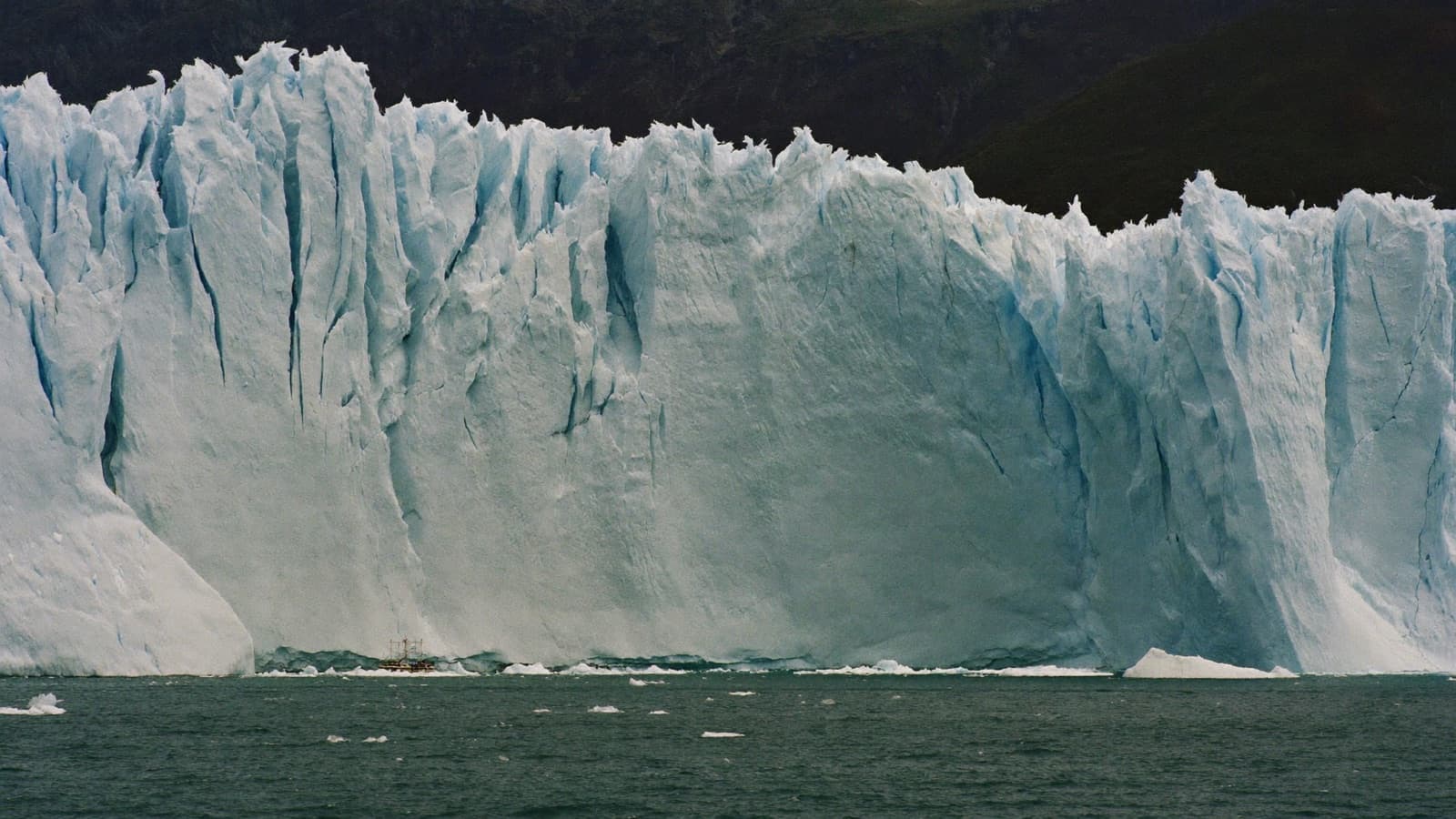
The centrepiece. The ship holds position roughly a quarter of a mile from the face of Margerie Glacier, a mile wide wall of ice about 250 feet above the water with roughly another 100 feet below.
Immediately alongside sits the Grand Pacific Glacier, much larger but dark with rock debris carried down from the mountains, which is a useful visual contrast: the same process producing very different appearances.
The ship rotates through 360 degrees, usually announced, so that every side gets an equal view. This is why staying on your balcony wastes half the time.
Expect several calving events during the hold. Watch the face rather than listening for the crack, because at a quarter of a mile the sound arrives about a second after the ice has already fallen.
Dress properly. Katabatic wind flowing off the icefield routinely makes the temperature here 10 to 15 degrees Fahrenheit colder than at the mouth of the bay. Hat, gloves, four layers. See glacier viewing tips.
Early afternoon: Johns Hopkins or Lamplugh
Depending on the date and ice conditions, the ship may enter Johns Hopkins Inlet, a narrow arm containing Johns Hopkins Glacier, or view Lamplugh Glacier, which has a notably blue face.
Johns Hopkins is a major harbour seal pupping site and access is restricted during the pupping season, typically until late June or early July. If your sailing is early in the season, expect Lamplugh instead.
Afternoon: the transit out
The return down the bay covers the same water in different light, and wildlife is often more active later in the day. Rangers continue narrating and usually hold a final talk.
This is a good time to attend the Huna Tlingit cultural presentation if you have not already. Glacier Bay is Huna Tlingit homeland, and the Tlingit account of the ice advancing and forcing the community out, then retreating again, is the part of the day most passengers never hear.
Around 4:00 to 5:00 pm: the rangers leave
The same small vessel collects them near the park boundary, and the ship exits toward Icy Strait, usually heading for Icy Strait Point or Juneau overnight.
How to spend the day well
- Be outside by 6:30 am for the entry and the lower bay.
- Attend at least one ranger talk in the theatre. It transforms the rest of the day.
- Be in position on an open forward deck forty minutes before Margerie. The rail fills.
- Alternate outside and inside. Eight hours on deck in the cold is not necessary or wise.
- Use binoculars constantly. Goats, bears and seabirds are all easy to miss without them.
- Do not book the spa or a long lunch. This is the day.
Which ships go
Entry is limited by National Park Service concession permits. Princess and Holland America visit most frequently, with Norwegian, Carnival and Seabourn on selected sailings. Royal Caribbean and Celebrity do not have entry.
Always confirm on the specific dated sailing rather than the cruise line brochure.
Frequently asked questions
What time does a cruise ship enter Glacier Bay?
Do you get off the ship in Glacier Bay?
How long does a ship stay at Margerie Glacier?
What is Johns Hopkins Inlet and why is it sometimes closed?
Related articles
Destinations
Glacier Viewing Tips for an Alaska Cruise
How to make the most of a glacier day on an Alaska cruise, including where to stand, what to wear, when to go outside and what calving actually looks like.
Updated
Destinations
What Glacier Calving Actually Looks Like
What glacier calving is, what it actually looks and sounds like from a cruise ship, how often it happens and how to be looking when it does.
Updated
Onboard
What to Do on an Alaska Sea Day
How to use a sea day on an Alaska cruise, why they are different from warm weather sea days, and what is actually worth doing.
Updated