
Destinations
Glacier Viewing Tips for an Alaska Cruise
The glacier day is the reason most people book an Alaska cruise, and it is also the day most commonly wasted. Passengers stay on their balcony while the ship rotates, come out too late, dress inadequately and then wonder why the experience felt smaller than expected.
The short answer
For the best glacier viewing, be outside on an open forward deck forty minutes before the ship reaches the face, dress in four layers with a hat and gloves, and stay out for the full hour. The ship rotates 360 degrees so a balcony gives you half the view. Watch the ice rather than listening for it, because sound arrives seconds after a calving event.
Key points
- Do not stay on the balcony. The ship rotates and you will face the wrong way for half the time.
- Be in position forty minutes early. The best spots fill quickly.
- Dress for 10 to 15 degrees colder than the day in town, with wind on top.
- Watch the ice, do not listen for it. Sound arrives after the event.
- Attend the ranger or naturalist talk. It changes what you see.
The glacier day is the centre of an Alaska cruise and the day most often underplayed. Here is how to get everything out of it.
Do not stay on the balcony
This is the most common mistake and the most consequential. At every major glacier the ship holds position and rotates slowly through 360 degrees, specifically so that every passenger gets the same view. If you stay on your balcony you will spend roughly half the time looking at open water.
The right position is an open forward deck, or a forward facing observation lounge if the weather is genuinely severe. From there you can move, you can see the approach and the departure, and you are not dependent on which way the ship happens to be pointing.
Get outside early
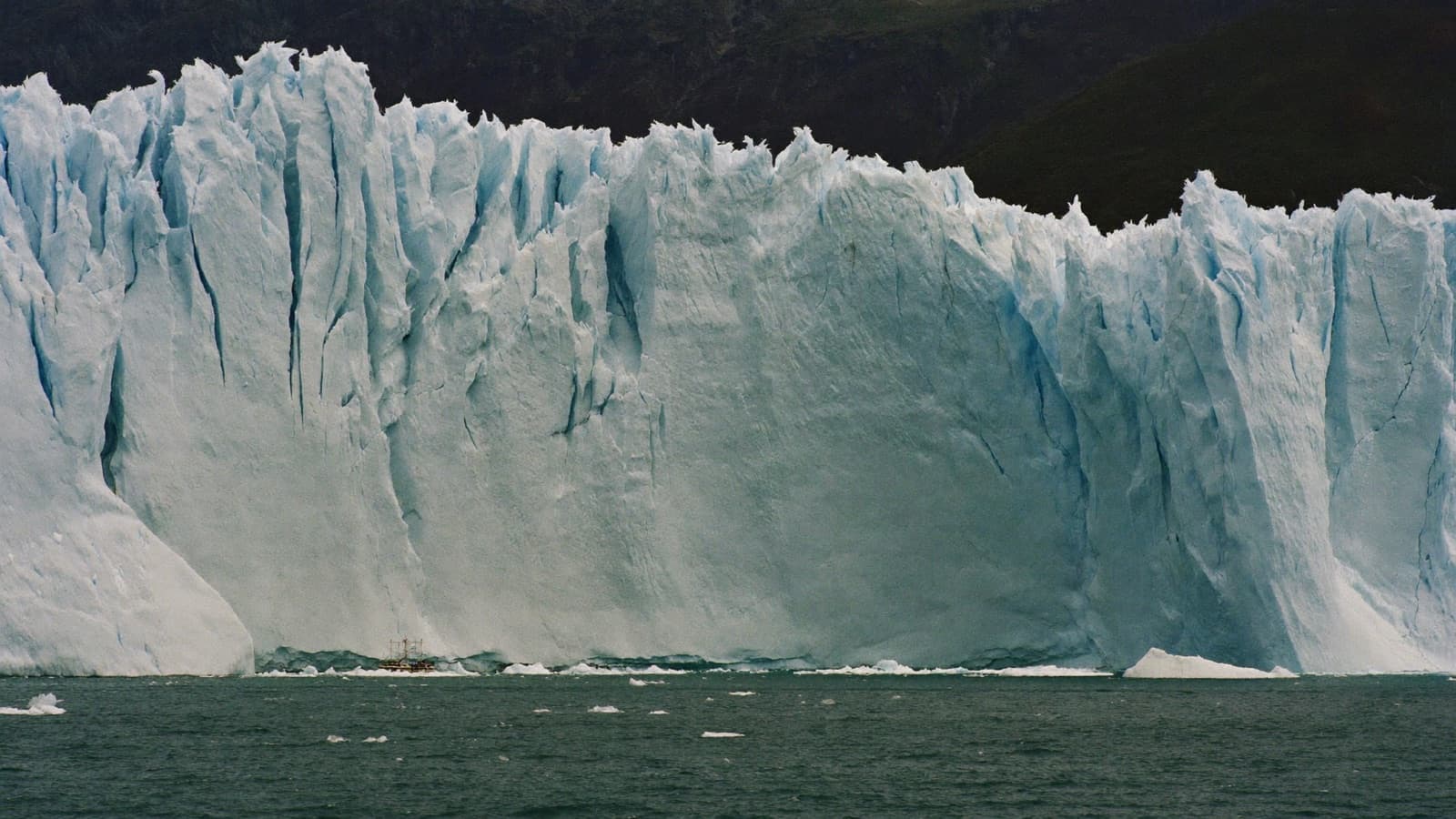
The ship's approach to a glacier is often the best part. Watching the ice grow from a distant white line to a wall filling the horizon takes forty minutes to an hour, and passengers who come out only when the ship stops have missed the sense of scale entirely.
Be in position at least forty minutes before the announced arrival. The good spots on the bow and the upper forward decks fill up, and on a busy sailing the rail is three deep by the time the ship holds.
Dress for the ice, not the forecast
Glaciers generate katabatic wind: cold, dense air flowing downhill off the icefield and out across the water. It routinely makes the temperature at the face 10 to 15 degrees Fahrenheit colder than at the mouth of the bay, and you are standing still in it.
Wear all four layers: base, fleece, light down, waterproof shell. Add a hat that covers the ears and gloves. In July. This is the one situation on an Alaska cruise where people who packed properly are visibly more comfortable than people who did not. See how cold is an Alaska cruise.
Watch the ice, do not listen for it
Calving is unpredictable and fast. The instinct is to react to the noise, but sound travels at roughly 340 metres per second, which means at a quarter of a mile you hear the crack about a second after the ice has already fallen, and at two miles nearly ten seconds after.
Pick a section of the face and watch it. Look for:
- Small pieces breaking away, which often precede a larger collapse
- Water surging at the base of the face
- Birds suddenly lifting, which sometimes precedes movement
- A vertical crack widening over minutes
Most calving events are small. A large one, where a column the height of a building shears off and drops, happens perhaps a few times in an hour at an actively calving face like Hubbard or Dawes.
Understand why the ice is blue
Dense glacial ice has had the air squeezed out of it over centuries of compression. Without air bubbles to scatter light, the ice absorbs the longer wavelengths, red and yellow, and transmits and reflects blue.
The practical consequence is that the bluest ice is the densest and most recently exposed: freshly calved faces, deep crevasses and the underside of a berg that has rolled. It also means glacial ice reads bluer on an overcast day than in bright sun, so grey weather improves rather than spoils the photograph.
Use the naturalist
On lines with permits for Glacier Bay, National Park Service rangers board at the park boundary and narrate the whole day, and a Huna Tlingit cultural interpreter travels with them. On other itineraries an onboard naturalist provides commentary of varying depth.
Attend at least one talk. The difference between looking at a wall of ice and understanding that you are travelling forward through 250 years of ecological succession is entirely down to somebody telling you.
Look away from the glacier
The glacier is the headline and the surroundings are frequently better.
- Harbour seals haul out on floating ice near tidewater glaciers, sometimes in their hundreds. In Endicott Arm this is the standout sight.
- Kittiwakes feed in enormous flocks where fresh meltwater meets salt water and stuns small organisms.
- Mountain goats appear as white dots on grey rock. Gloomy Knob in Glacier Bay is the reliable spot.
- Waterfalls pour off the walls in Tracy Arm, sometimes dozens at once after rain.
- The moraine and the bare rock near the face show you where the ice stood a few decades ago.
What each glacier day is like
| Destination | Time at the face | Character |
|---|---|---|
| Glacier Bay | About an hour, within an 8 to 10 hour day | Multiple glaciers, rangers aboard, ecological narrative |
| Hubbard Glacier | 1 to 2 hours | The largest face in Alaska, six miles wide |
| Tracy Arm | Variable, often limited by ice | The most enclosed and dramatic setting |
| Endicott Arm | 45 to 90 minutes | Heavy ice, hundreds of seals, dawn light |
| College Fjord | 30 to 60 minutes | A dozen glaciers visible at once |
The hour most people miss
On itineraries that transit Endicott Arm or Tracy Arm, the ship often enters between 5:00 and 7:00 am. The water is glassy, the light in a north facing fjord at that hour is the best of the entire cruise, and there will be perhaps twenty people on deck.
Set an alarm. It costs you an hour of sleep and it is consistently what passengers describe afterwards as the moment the trip became memorable.
Frequently asked questions
Which side of the ship is best for glacier viewing?
How close does a cruise ship get to a glacier?
What does glacier calving sound like?
How long does a cruise ship stay at a glacier?
Related articles
Destinations
What Glacier Calving Actually Looks Like
What glacier calving is, what it actually looks and sounds like from a cruise ship, how often it happens and how to be looking when it does.
Updated
Destinations
A Day in Glacier Bay, Hour by Hour
What a Glacier Bay cruise day is actually like hour by hour, from rangers boarding at dawn to the afternoon transit out, and how to make the most of it.
Updated
Onboard
What to Do on an Alaska Sea Day
How to use a sea day on an Alaska cruise, why they are different from warm weather sea days, and what is actually worth doing.
Updated