
Destinations
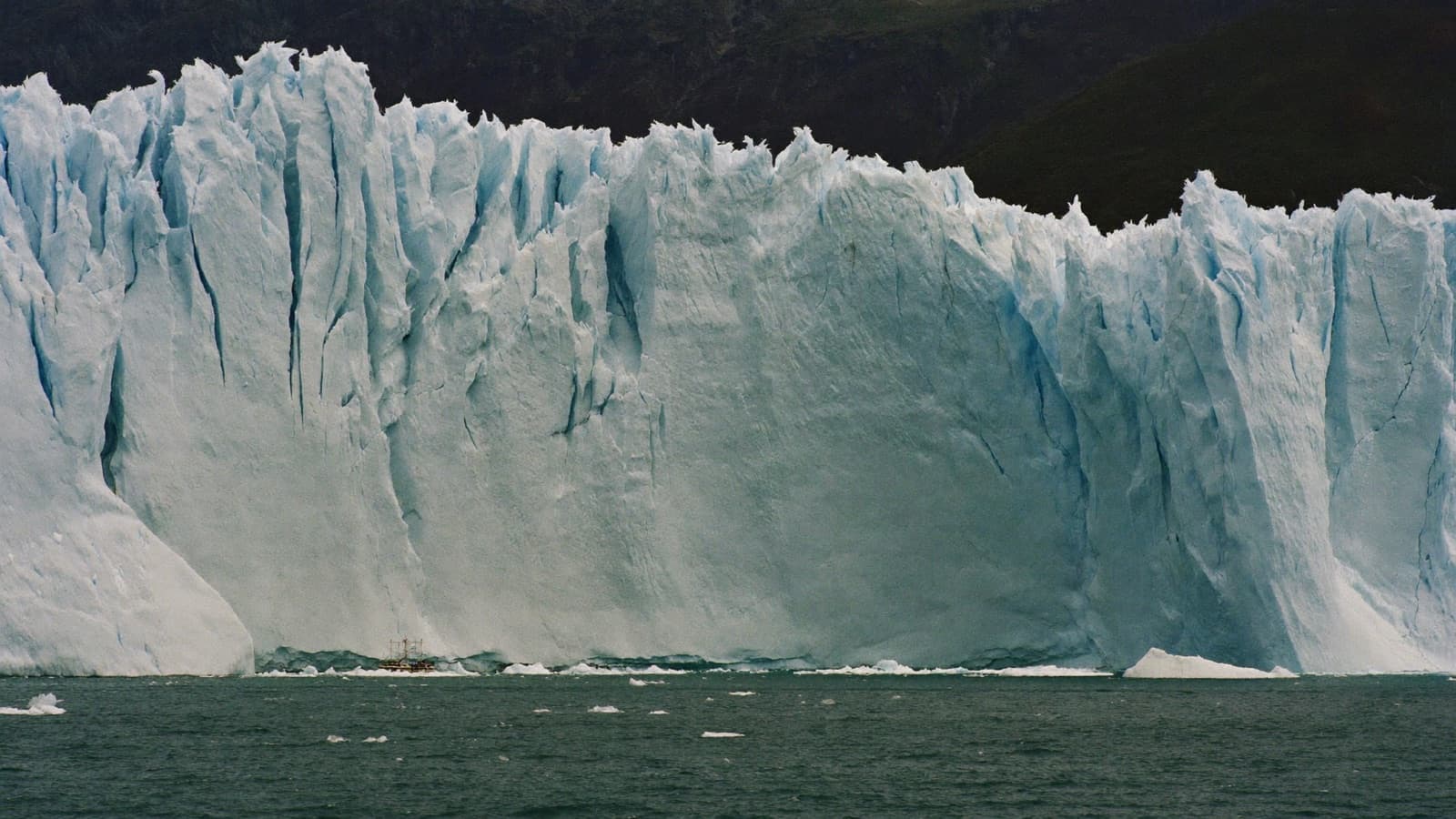
What Glacier Calving Actually Looks Like
Calving is the single event everyone hopes to see on a glacier day, and most passengers miss the big ones because they are looking in the wrong place or reacting to sound that arrives too late. Understanding the mechanics makes you far more likely to catch it.
The short answer
Glacier calving is ice breaking away from the face of a tidewater glacier into the water. Most events are small pieces falling with a crack and a splash. Large events, where a column the height of a building shears off, happen a few times an hour at an active face. Watch the ice rather than listening, because sound arrives seconds late.
Key points
- Sound arrives after the event. At a quarter mile, about one second later.
- Small calving is constant; large events happen a few times an hour.
- Watch a section of the face rather than scanning the whole thing.
- Video captures calving far better than stills.
- The wave and churned ice afterwards is the photograph worth taking.
Calving is the event that makes a glacier day feel like an event rather than a view. Here is what actually happens and how to be looking when it does.
The mechanics
A tidewater glacier is a river of ice moving downhill, typically a few feet to a few metres a day. When it reaches the sea, the front is undercut by relatively warm salt water, weakened by surface melt, and fractured by the stresses of flow.
Eventually a section fails. Ice at the face separates and falls, and because glacial ice is roughly nine tenths as dense as water, a large piece displaces a great deal of it.
What you actually see
Small events are near constant at an active face: a piece the size of a car detaches, falls with a crack and a splash, and floats away. These happen every few minutes and most passengers stop noticing them after twenty.
Medium events produce a column or slab several metres across, a substantial splash and a wave that reaches the ship. These happen every ten to twenty minutes at an active face.
Large events are what people came for. A section tens of metres high shears off the face and drops, generating an enormous plume of spray and a wave that visibly travels across the water. At Hubbard, Margerie or Dawes you might see two or three in an hour of holding position.
Shooters are the rarest and most spectacular: ice that calves from below the waterline and surfaces explosively, appearing to launch out of the water with nothing having fallen from above.
The sound problem
This is the single most useful thing to understand.
Sound travels at roughly 340 metres per second. Light is effectively instantaneous. At a quarter of a mile, a typical hold distance at Margerie Glacier, the crack reaches you about a second after the ice has already fallen. At two miles, which is common at Hubbard on a heavy ice day, it is nearly ten seconds.
If you wait for the noise, you have missed it. Everyone who turns toward a sound is looking at churned water where a wall of ice was.
How to watch
- Pick a section of the face and watch it. Scanning the whole six mile front at Hubbard guarantees you miss everything.
- Prefer sections that look active. Fresh blue ice, recently exposed, is where the face is failing.
- Watch for precursors. Small pieces dropping in sequence, water surging at the base, a vertical crack widening over minutes, birds lifting suddenly.
- Use binoculars for scanning and the naked eye for watching. Binoculars narrow the field too much to catch a large event.
- Do not look away to check the camera. The event lasts two to four seconds.
Photographing it
Stills are the wrong medium for calving. By the time you have reacted, focused and pressed the shutter, the ice is in the water.
Video works far better. Set the camera or phone running on a section of the face and let it record. You can extract a frame afterwards, and the sound and motion tell the story better anyway.
The still worth taking is the aftermath: the wave travelling out, the churned ice, the spray hanging in the air, the birds arriving to feed on organisms stirred up from the depths. That is often a more interesting photograph than the fall itself.
More technique in our photography guide.
Where calving is most active
| Glacier | Activity | Typical hold distance |
|---|---|---|
| Hubbard | Very high | 1 to 4 miles, ice dependent |
| Dawes, Endicott Arm | High | 0.5 to 1 mile |
| Margerie, Glacier Bay | Moderate to high | About 0.25 mile |
| Sawyer, Tracy Arm | High | Often unreachable by large ships |
| Harvard, College Fjord | Moderate | 0.5 to 1 mile |
Ironically, the most actively calving glaciers generate the most floating ice, which pushes ships further away. Hubbard is the clearest example: a heavy calving day is also a day when the captain holds well back.
Why some ice is blue
Dense glacial ice has had the air compressed out of it over centuries. Without bubbles to scatter light, it absorbs longer wavelengths and transmits blue. Freshly calved faces and recently rolled bergs show the deepest colour, and it reads more strongly under overcast skies than in bright sun.
That is why a grey day at a glacier is not a compromise.
Frequently asked questions
What is glacier calving?
How often do glaciers calve?
Why do you hear the crack after the ice falls?
Is it dangerous to be near a calving glacier?
Related articles
Destinations
Glacier Viewing Tips for an Alaska Cruise
How to make the most of a glacier day on an Alaska cruise, including where to stand, what to wear, when to go outside and what calving actually looks like.
Updated
Destinations
A Day in Glacier Bay, Hour by Hour
What a Glacier Bay cruise day is actually like hour by hour, from rangers boarding at dawn to the afternoon transit out, and how to make the most of it.
Updated
Photography
Alaska Cruise Photography Tips
How to photograph an Alaska cruise well, covering exposure for ice, whale settings, low light in fjords, gear choices and protecting equipment from rain.
Updated