
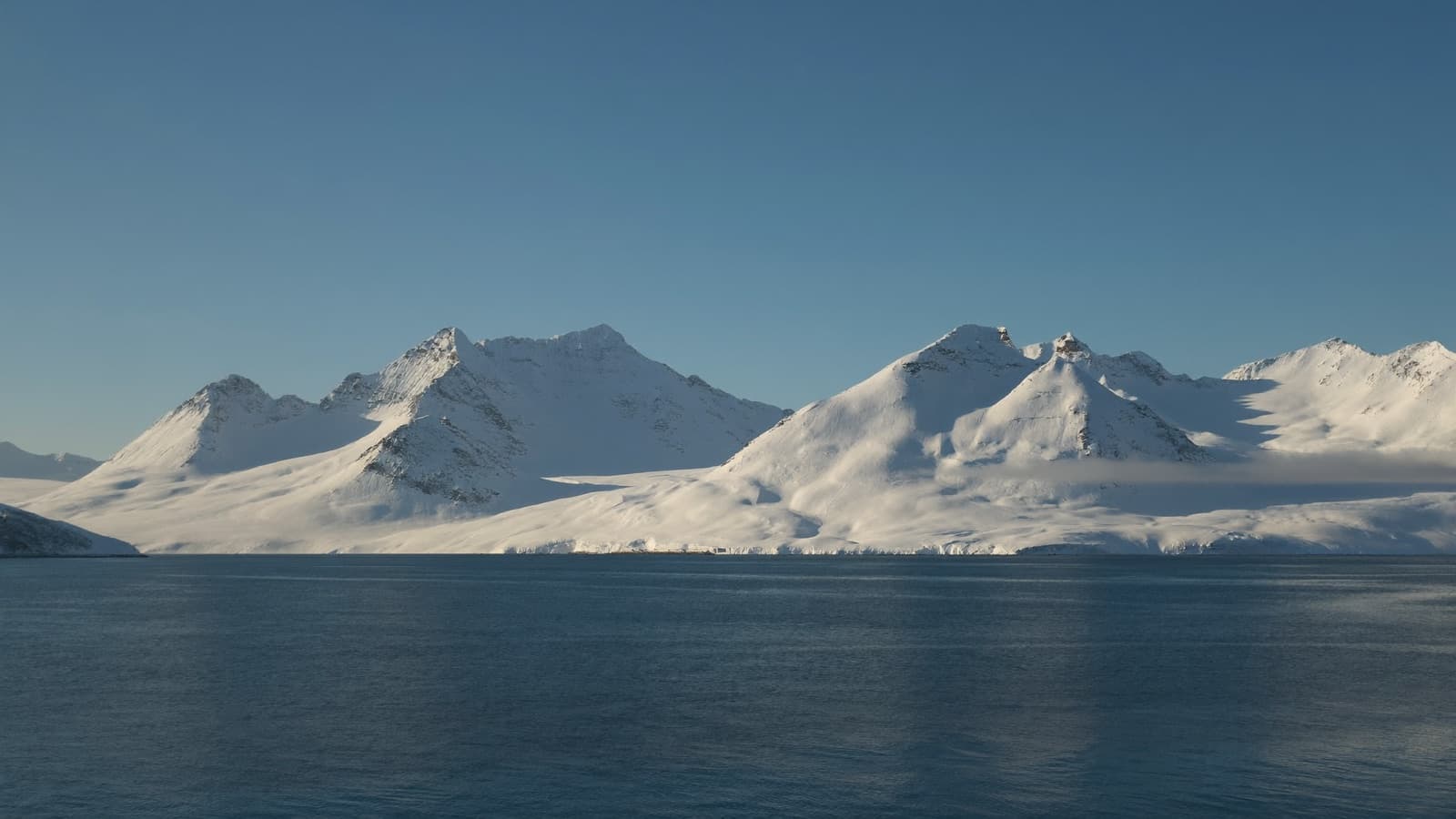
Glacier
Hubbard Glacier
Hubbard Glacier is the largest tidewater glacier in North America and presents the widest actively calving face any cruise ship visits in Alaska, roughly six miles across and up to 400 feet high. Unlike almost every other glacier on the circuit, it is advancing rather than retreating. Ships typically spend one to two hours holding position in Disenchantment Bay.
The short answer
Hubbard Glacier is North America's largest tidewater glacier, with a calving face about six miles wide and up to 400 feet above the water. It sits at the head of Yakutat Bay and features on most Gulf of Alaska itineraries, including those from cruise lines that lack Glacier Bay permits. Ships hold position for roughly one to two hours.
Key points
- The largest tidewater glacier in North America, with a face roughly six miles wide.
- Ice rises up to 400 feet above the waterline, with several hundred more feet below.
- It is advancing, not retreating, which is unusual and worth understanding.
- Featured on Gulf of Alaska routes and used by lines without Glacier Bay access.
- How close the ship gets depends entirely on floating ice, and varies day to day.
Quick facts
- Region
- Alaska, United States
- Typical time here
- 1 to 2 hours holding position, no landing
- Best months
- June, July, August
- Wildlife
- Harbor sealSea otterHumpback whaleBald eagleKittiwake
What makes Hubbard different
Hubbard Glacier flows some 76 miles from its source in the Yukon's Saint Elias Mountains down to the sea at the head of Yakutat Bay. What arrives at the water is a wall of ice roughly six miles across, rising as much as 400 feet above the surface, with an estimated 300 or more feet below it.
For comparison, Margerie Glacier in Glacier Bay presents a face around one mile wide. Hubbard is a different order of scale, and travellers who have seen both usually describe Hubbard as the more physically impressive and Glacier Bay as the better day.
The other distinguishing feature is direction of travel. Almost every glacier a cruise passenger sees in Alaska is retreating, in several cases dramatically. Hubbard has been advancing for more than a century. It has twice surged far enough across the mouth of Russell Fiord to dam it entirely, in 1986 and again in 2002, turning the fjord into a lake until the ice dam failed.
Face width
~6 miles
The widest on any Alaska cruise route
Height above water
Up to 400 ft
Roughly a 35 storey building
Length
~76 miles
From the Saint Elias Mountains to the sea
Typical viewing time
1 to 2 hours
Holding position in Disenchantment Bay
What a Hubbard Glacier day looks like
Hubbard is a shorter event than Glacier Bay. The ship enters Yakutat Bay, works up into Disenchantment Bay, holds position facing the glacier, usually rotates so both sides get the view, then turns and leaves.
The variable that determines the quality of the day is ice. Hubbard calves heavily, and the amount of floating ice in Disenchantment Bay changes constantly. On a clear day with light ice a ship may hold a mile or less from the face. On a heavy ice day the captain may stop three or four miles out, and there is nothing to be done about it.
- Approach: roughly an hour of transit up Yakutat Bay, with the glacier visible from a long way out and growing steadily.
- Holding position: typically 60 to 120 minutes, with a slow rotation.
- Calving: Hubbard is among the most actively calving faces in Alaska. Expect several events during a normal viewing period.
- Departure: the ship turns and exits, usually continuing toward Seward, Whittier or the Inside Passage overnight.
Wildlife at Hubbard Glacier
Hubbard is a scenery stop rather than a wildlife stop, but the ice supports more life than most passengers notice.
| Species | Where | Likelihood | Notes |
|---|---|---|---|
| Harbor seal | Hauled out on floating ice | High | Disenchantment Bay is an important pupping area |
| Sea otter | Yakutat Bay on the approach | Moderate to high | Often in rafts near kelp |
| Kittiwake and gull | Near the glacier face | High | They feed on organisms stirred up by calving |
| Humpback whale | Yakutat Bay | Low to moderate | More likely on the approach than at the face |
| Bald eagle | Shorelines | Moderate |
Best time to see Hubbard Glacier
Hubbard is visited on Gulf of Alaska itineraries, which run from roughly mid May to mid September. The main seasonal variable is fog rather than temperature.
| Month | Conditions | Notes |
|---|---|---|
| May | Cool, more ice in the bay | Ships may hold further out due to ice |
| June | Long days, moderate fog risk | Reliable and among the best months |
| July | Warmest, most calving activity | Peak season, good conditions |
| August | Warm, higher fog and rain risk | Good calving, less reliable visibility |
| September | Cooler, clearer air when settled | Sharpest views but higher swell risk |
Photography tips for Hubbard Glacier
- Panoramic thinking, not telephoto thinking. A six mile face will not fit in a normal frame. Either shoot a panorama sequence or pick one section and photograph it properly rather than trying to include everything.
- Add a stop of exposure compensation. A frame filled with ice will fool any meter into underexposure.
- Include the shoreline or a ship in the frame. Without a reference, a 400 foot wall of ice reads as a small ridge.
- Video the calving, photograph the aftermath. Calving is unpredictable and fast. Video captures it far better than stills; the still worth taking is the wave and the churned ice immediately after.
- Watch for the darker ice. Bands of debris carried down from the mountains give the face texture and structure. Underexposing slightly makes those bands read.
- Cold drains batteries. Standing on an open deck for ninety minutes in katabatic wind will halve a battery. Carry a spare warm in a pocket.
Excursions and prices
| Excursion | Duration | Typical price | Effort | Notes |
|---|---|---|---|---|
| Deck viewing during the approach and hold | 2 to 3 hours | Included | Easy | The whole event. Get outside rather than staying on a balcony. |
| Forward observation lounge | 2 to 3 hours | Included | Easy | Warm alternative with good sightlines on most ships. |
| Onboard naturalist commentary | During the approach | Included | Easy | Varies by line. Strong on Princess and Holland America, thin elsewhere. |
Frequently asked questions
How big is Hubbard Glacier?
Which cruise lines visit Hubbard Glacier?
Is Hubbard Glacier better than Glacier Bay?
How close does the ship get to Hubbard Glacier?
Why is Hubbard Glacier advancing?
Do Hubbard Glacier visits get cancelled?
Cruise lines and planning guides for this stop
A detailed guide to Royal Caribbean in Alaska: which ships sail, why it does not visit Glacier Bay, family suitability, dining, cabins, pricing and how it compares.
A detailed guide to Celebrity Cruises in Alaska: Edge and Solstice class ships, glacier itineraries, adults leaning atmosphere, dining, cabins, pricing and who it suits.
A detailed guide to Holland America Line in Alaska: mid size ships, Glacier Bay access, Yukon and Denali cruisetours, dining, cabins, pricing and who the line suits.
A detailed guide to Princess Cruises in Alaska: which ships sail, Glacier Bay access, the wilderness lodge cruisetour network, cabins, dining, pricing and who the line actually suits.
A tested Alaska cruise packing list built around layering: what to bring, what quantities, what to leave at home, and what changes by month and cabin type.
Whether a balcony is worth the money on an Alaska cruise: how much you actually use it, what the ship rotation means for views, and when an interior is the smarter choice.
How rough Alaska cruises actually are: Inside Passage versus Gulf of Alaska, which cabins move least, what remedies work and how to plan if you are prone to motion sickness.
How to structure an Alaska cruise port day: real available time, gangway queues, tendering, all aboard timing, what to carry and how to build in a buffer.